
Flags and Facts


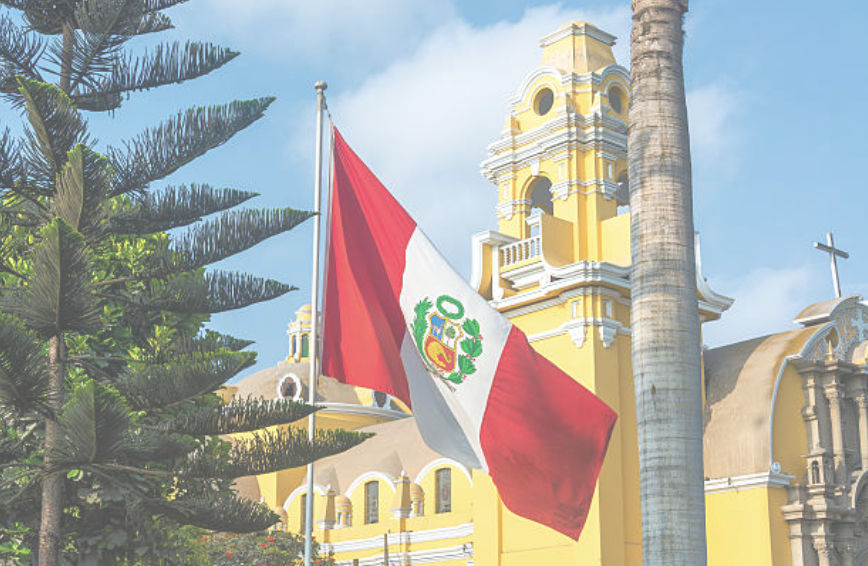
Three equal vertical bands of red (left side), white, and red, with the coat of arms centered on the white band; the coat of arms has a shield with a vicuna, a cinchona tree, and a yellow cornucopia spilling out coins.
Meaning: The vicuna represents fauna, the cinchona tree is the source of quinine, and the cornucopia symbolizes mineral wealth; red stands for blood shed for independence, and white for peace.
As a country with an incredibly diverse climate, Peru has 28 of the world's 32 identified climates. From the arid lowlands, to high sierras of the Andes mountains, to the dense forests of the Amazon, important mineral resources are found across the country. As the world’s second largest producer of silver and copper, Peru's metals and mineral exports make up 55% of the country’s total exports.


Major industries include mining minerals, fishing, and petroleum extraction and refining. Peru’s economy grew an average of 5.6% per year from 2009 to 2013 due to stable exchange rates, low inflation, and high international prices for Peru’s exports. Even though Peru has a high increase in production of goods and services, the country’s dependence on its mineral exports make its economy vulnerable to fluctuation in world prices and sudden changes. Peru has signed trade deals with important international countries like the US, Canada, Singapore, and China. Major imports include oils and minerals.
The poverty rate has been reduced by over 35 percent since 2004. The HUMALA administration has helped sign several economic packages in 2014 to help growth in the economy, altering environmental regulations to help reduce administrative costs and delays. As the 47th largest economy in the world and 53% of the world average, the country’s GDP is $371,290,000,000 (USD) as of 2025. The GDP per capita is $12,000 USD and the GDP growth rate is 2.4%. Peru’s economy is closely tied to its climate and environment, depending on mining minerals like metals and gold, fishing along the coast and agriculture in the lowlands, and tourism in important sites and cities like Machu Picchu and Lima.

Hand-Drawn Map
Flag Explanation
Economy